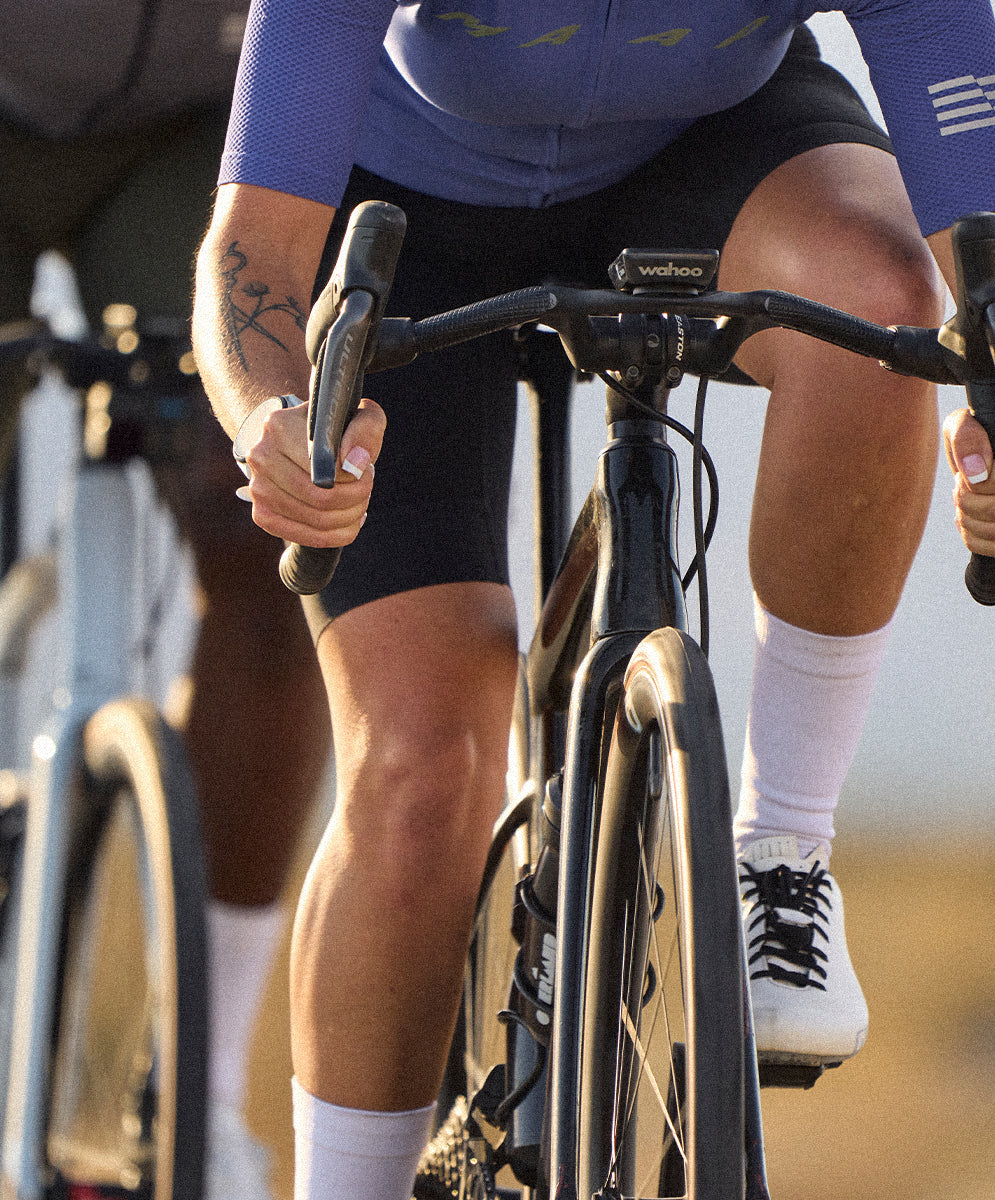

Watch the front of the peloton this July and look at the drops. Tadej Pogačar, Jonas Vingegaard and Remco Evenepoel all rolled out of Barcelona with brake hoods pulled in narrow and drop ends that kick visibly outward. BikeRadar's Grand Départ tech roundup calls the narrow-hood, flared-drop cockpit the defining equipment story of this Tour.
What is easy to miss is why. Most of that flare is not there to make anyone's hands happier. It is there to satisfy a tape measure.
The rule, in plain English
Since 1 January 2026, the UCI applies three numbers to road handlebars in mass-start racing:
- 400mm minimum overall width, measured outside-to-outside across the bar,
- 280mm minimum between the inner edges of the brake hoods,
- 65mm maximum flare, the allowed offset between hoods and drop ends.
The hood minimum has a story of its own. The first draft of the rule put it at 320mm, which drew immediate protest, loudest from the women's peloton, where narrower bars are a biomechanical necessity rather than a preference. The UCI backtracked and settled on 280mm, and BikeRadar's summary of the 2026 rule changes has the full detail.
Flare as a compliance tool
Here is the trick the pros are playing. Narrow hoods are an aerodynamic win: pull the levers inboard and the rider's frontal area shrinks. But a bar that narrow would fail the 400mm overall minimum. So the drops splay outward until the widest point of the bar clears the rule.
That is what you are seeing on the Tour's front row: hoods set as close as the 280mm floor allows, drops flared out to reach 400mm at the ends. The flare exists so the bar passes a check. It is geometry in service of the rulebook, and riders spend as little time in those splayed drops as they can.
The market has already followed. Canyon's latest Aeroad CFR LTD ships with a stock cockpit measuring 350mm at the hoods and 375mm at the drops with 14 degrees of flare, a shape that would have looked like a custom one-off two seasons ago, now hanging in shops.
The more interesting signal from Barcelona
The opening team time trial carried a quieter trend: rider-specific, 3D-printed cockpits across much of the field, shaped to each rider's grip (Cyclingnews covered the stage). When results are on the line and the rules allow it, the fastest riders in the world pay to have the bar meet their hands exactly where they naturally sit.
That instinct, not the tape measure, is the part worth copying.
Flare for your hands
There is a different way to arrive at a handlebar's shape: start from the hand and work backwards.
Hold your arms out relaxed, palms down, and your hands do not sit flat. The thumbs ride slightly high. Our SWOPE bar-top geometry is drawn around that resting position: 12 degrees of sweep and 15 degrees of slope, so the tops meet your hands the way they naturally fall instead of forcing the wrists flat against a straight tube. The drops and the flare on our RR and AR follow from the same brief. Comfort set the shape; nothing on the bar exists to satisfy a minimum.
The two bars sit on a spectrum, and both ride road and gravel: the RR leans road, the AR leans gravel and all-road. Neither was drawn against a rulebook dimension.
What to take from the Tour
None of this makes the peloton's flared drops wrong. Elite racing optimizes for watts inside whatever boundary the UCI draws, and flare happens to be the boundary's release valve this year.
But if you are shopping for a bar and a spec sheet leads with a big flare number, it is worth asking the question this Tour makes obvious: is that flare there for your hands, or for a rule you will never race under?
Update from the race: 9 July
Two things happened at the Tour this week that belong in this piece.
The holdout folded. Mathieu van der Poel spent the spring as the most visible wide-bar rider left in the bunch: a team mechanic taped his bars at 450mm outside-to-outside for Cyclingnews at Tirreno-Adriatico in March, and he told them "for now I'm sticking to wide bars." By the Grand Départ that was over. Cyclingnews's Tour tech gallery lists his Tour bars at 350mm and notes he has "finally caught up." When the last famous wide-bar rider goes narrow, the compliance cockpit is no longer a trend. It is the peloton's default setting.
And on stage 6, the rulebook reached past the bar to the hands themselves. The race commissaire reprimanded Lotto-Intermarché's Huub Artz for riding with his hands inside the bar, underneath the brake levers during a breakaway. The rule in play dates from 2021: a rider's only points of support are the feet on the pedals, the hands on the handlebars and the seat on the saddle. The television commentary argued the point during the stage, since Victor Campenaerts was riding forearms-flat further up the same road. "I think they're kind of, by the sounds of it, making rules up," was Adam Blythe's verdict on air.
So the rulebook now covers bar width, flare, and, as of this week, hand placement. Racing will keep optimizing inside whatever lines get drawn. The rest of us get to pick a bar the other way around: hands first.
Don Sheff is the founder of Coefficient Cycling and the designer of the SWOPE bar-top geometry.


0 comments