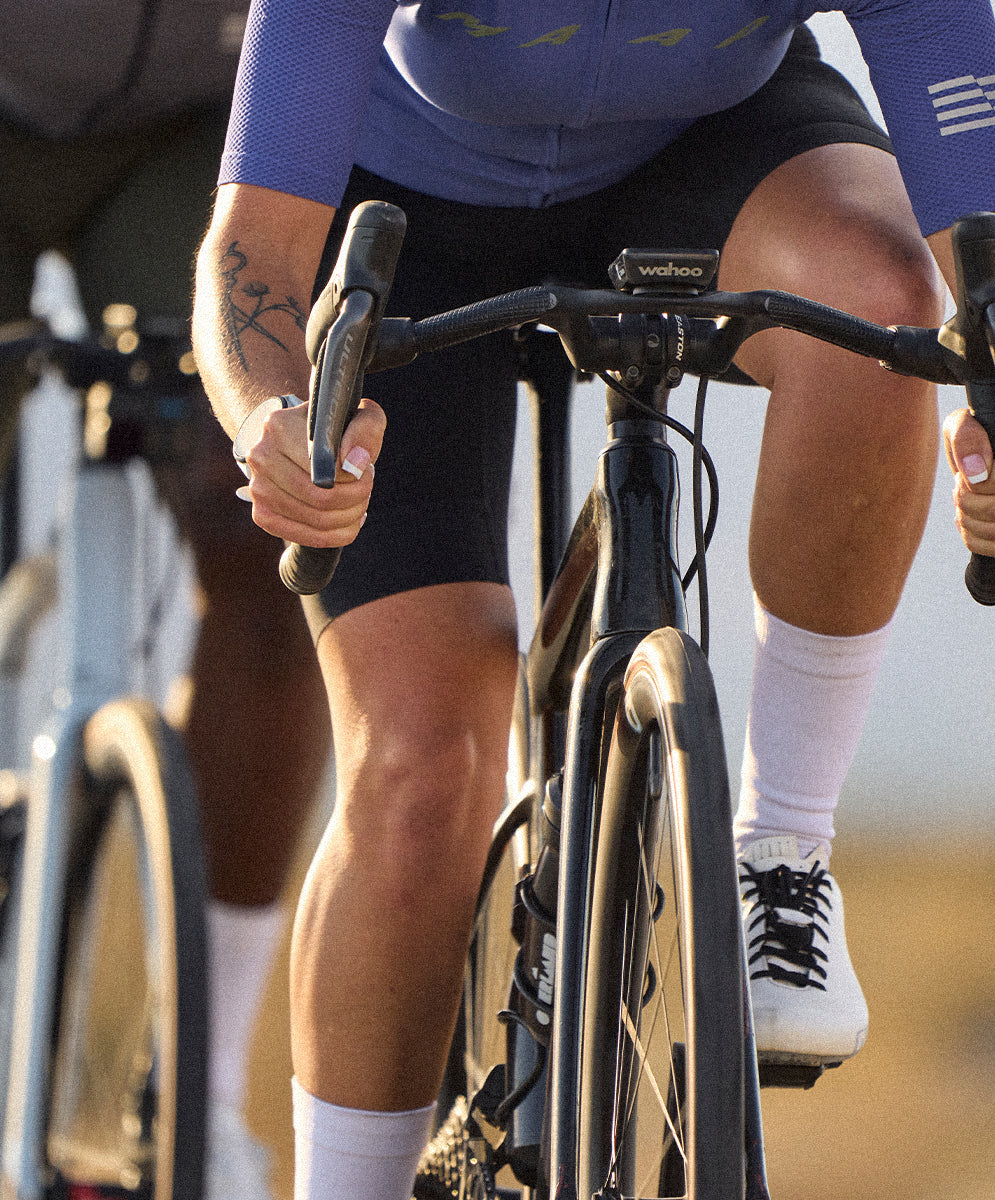

Ask a group of riders what bugs them on long rides and numb hands come up fast. Fingers tingle, a hand goes quiet, and you spend the last hour shaking it out at every stop. The encouraging part is that most of the causes sit within your control: how much weight your hands carry, where they sit on the bar, and how long they stay in one place.
Start with the simple mechanics
Hands tend to go numb on the bike for an unglamorous reason: sustained pressure. Part of your body weight rests on your hands, that weight presses a small patch of palm into the bar, and the longer the same patch carries the load without a break, the more likely the hand is to complain. Rough surfaces add to the workload and long days multiply it, but pressure and time are the heart of the problem.
That points to the levers you can actually pull. You can reduce how much weight your hands carry, you can spread the pressure across more of your palm, and you can move your hands so no single spot holds the load for an hour straight. Everything below is a version of one of those.
Check how much weight your hands carry
If your hands go numb quickly and on almost every ride, look at your position before you look at your gloves. A saddle tilted nose-down slides you forward and turns your hands into props. A reach that is too long, or a front end set lower than your flexibility allows, does the same thing. You end up leaning on the bar instead of resting on it, and no tape or glove can absorb that.
These adjustments interact, which is why a session with a professional bike fitter is usually better value than any single component change. A good fitter watches how you actually sit, levels the saddle, and sets your reach so your hands rest on the bar with soft elbows rather than locked ones.
Change hand position before you have to
Time in one position is the lever riders forget. A drop bar already gives you the tops, the hoods and the drops, and each loads a different part of your hand. Moving between them shifts the pressure to a fresh patch of palm before the old one has had enough. If you catch yourself parked on the hoods for forty minutes, change grip before your hands ask you to.
It helps to tie the habit to things that already happen on a ride: change position at the top of a climb, when you take a drink, when the surface changes. On gravel, where your hands work harder, use the calm stretches to give each contact point a rest.
Get the bar itself right
Bar width is a fit question with a comfort consequence. A bar much wider than your shoulders splays your wrists outward; one much narrower pinches them inward. Either way, your hands meet the bar at an awkward angle and pressure concentrates where it should not. Width is worth measuring rather than guessing, which is another point in the bike fitter's favor.
Tape and padding are the cheapest lever. Thicker bar tape, gel inserts under the wrap, or padded gloves spread pressure over more of your palm and can take the edge off. They do not change how much weight your hands carry, so treat them as one layer of the answer rather than the whole of it.
Then there is the shape of the top section. A straight, round tube gives your hand one real way to hold it. A shaped top gives you more. This is the part of the problem we spend our days on, so read the next section knowing who wrote it.
What a shaped bar top changes, and what it does not
Coefficient's two drop bars, the RR and the AR, are built around a bar top that sweeps rearward and slopes downward instead of running straight across, a shape we call SWOPE. The point of it is options: several distinct, comfortable places to put your hands, so changing position becomes the natural default rather than something you schedule.
Reviewers describe the effect better than we can. On long seated climbs, road.cc found the sloping, backswept design removed the uneven wrist stresses of a conventional bar, reducing forearm fatigue and shoulder tension, and called the RR an ergonomically accomplished handlebar with "positional options that set it apart from almost all of the competition." the5krunner found the backwards sweep of the tops more comfortable and natural than a standard bar. road.cc also reported great shock absorption riding on the hoods, while Cyclingnews, comparing the two bars, found the RR the more solid and the AR the more forgiving, a reminder that ride feel varies with your bike and tires.
Be clear about what that is and what it is not. A bar with more hand positions is one lever among the several on this page. It is not a cure for numb hands, and nobody should sell you one as if it were. If your position dumps weight onto your hands, a new bar will not rescue it. Fix the fit first.
RR or AR, if you go that route
The two bars sit on a spectrum, and both are made for road and gravel. The RR leans road: it is the firmer, faster-feeling of the two, with real gravel credentials. Ian Boswell won the 2021 Unbound Gravel 200 riding it, as the independent pro bike checks from Bike Perfect and Gravel Cyclist documented. It comes in 36, 38, 40, 42 and 44cm widths. The AR leans gravel and all-road: the more compliant of the two, and quick on the road as well, in 38, 40, 42, 44 and 46cm widths. Choose by ride feel and where you spend most of your time, and choose width with your fitter's input. You can read more about the thinking behind the shape on our science page, or browse the full range of Coefficient road bike handlebars.
Which nerve is it?
Where the numbness shows up is worth noticing. Two nerves carry most of the feeling in your fingers, each covers its own part of the hand, and the fingers that go quiet first hint at which one is being squeezed. That can point you to the setup change most likely to help, and it gives a bike fitter or a doctor something specific to work with. Treat it as a rough map. It is not a diagnosis.
On very long rides, hand symptoms are common. When researchers examined 25 riders before and after a 600 km ride, 23 of them finished with nerve symptoms in their hands, such as numbness or weakness (Patterson et al., 2003).
Ring and little finger: the ulnar nerve
Numbness or tingling in your little finger and the outer half of your ring finger follows the ulnar nerve. It enters the hand through a narrow channel called Guyon's canal, at the heel of the palm on the little-finger side. The American Academy of Orthopaedic Surgeons (AAOS) gives "cycling long distances with the body weight resting through the palm on a handlebar" as a common example of chronic pressure that can cause it, and in cycling the problem has its own name, cyclist's palsy. Left to build, it can also weaken the hand, with a poor grip, a weak pinch and trouble spreading or closing the fingers.
The fixes aim to put less pressure on that part of the palm and to leave it there for less time. The AAOS suggests that cyclists change hand position on the bar frequently and add padding between the wrist and the handlebar. In a lab study of 36 experienced riders on a stationary bike, padded gloves cut pressure over the fleshy heel of the palm below the little finger by 10 to 28%, and of the tops, hoods and drops, the drops produced the highest pressure there along with the most bent-back wrist (Slane et al., 2011). So if the outside of your hand goes numb in the drops, ride shorter spells down there and move up to the hoods or tops before the tingling starts. If it happens wherever your hands sit, go back to the weight question earlier in this article: a nose-down saddle or a long reach puts more of you on your palms, and that is a job for a fitter.
Thumb, index and middle finger: the median nerve
Numbness in your thumb, index and middle fingers and the thumb side of your ring finger follows the median nerve. It passes through the carpal tunnel on the palm side of the wrist, and this is the pattern of carpal tunnel syndrome. According to the AAOS, symptoms often come on when the wrist is held bent forward or backward for a long time, and keeping the wrist straight, in a neutral position, reduces pressure on the nerve. Long rides may aggravate it. When researchers tested riders' nerves before and after a six-day, 420-mile tour, carpal tunnel syndrome had worsened in 3 of the 28 hands tested, with a new case in 1 hand after the ride (Akuthota et al., 2005).
Here the thing to watch is wrist angle. Look at your wrists on the hoods and in the drops, or ask a friend to photograph you riding. If they sit sharply bent back or curled forward, ask a fitter whether the bar angle, the lever position or your reach can bring them closer to straight. Keep moving your hands as well; the AAOS notes that many people with carpal tunnel symptoms find that moving or shaking their hands helps.
When the pattern is mixed
If the numbness covers the whole hand, or fits neither pattern, your fingers alone cannot tell you where a nerve is being pinched. A clear pattern does not settle it either. The ulnar nerve can also be compressed at the elbow, and the AAOS notes that a pinched nerve in the neck can cause similar symptoms. Doctors use an examination and sometimes nerve conduction tests to work out which nerve is involved and where. The NHS advice on pins and needles is not to self-diagnose, and to see a doctor if it is constant or keeps coming back.
Use the map to have a better conversation with a professional. The AAOS advises seeing a doctor for ulnar nerve symptoms that are severe, or milder ones that have lasted more than six weeks, and warns that a nerve compressed for a long time can lead to muscle wasting in the hand that cannot be reversed. Get weakness checked promptly too, such as a weak grip, clumsy fingers or dropping things; the AAOS says carpal tunnel syndrome left untreated for too long can cause permanent loss of feeling in the fingers and weakness in the hand. If numbness or weakness comes on suddenly, it is not a bike-fit question. The CDC lists sudden numbness or weakness in the face, arm or leg, especially on one side of the body, among the signs of stroke, and says to call 911 right away.
Sources for this section: AAOS OrthoInfo, Ulnar Tunnel Syndrome of the Wrist, Cubital Tunnel Syndrome and Carpal Tunnel Syndrome; NHS, Pins and needles; CDC, Signs and Symptoms of Stroke; Patterson JM, Jaggars MM, Boyer MI, "Ulnar and median nerve palsy in long-distance cyclists", American Journal of Sports Medicine, 2003; Slane J, Timmerman M, Ploeg HL, Thelen DG, "The influence of glove and hand position on pressure over the ulnar nerve during cycling", Clinical Biomechanics, 2011; Akuthota V et al., "The effect of long-distance bicycling on ulnar and median nerves", American Journal of Sports Medicine, 2005.
When numbness is more than a nuisance
Most on-bike hand numbness eases when you change position and settles soon after the ride. If yours does not follow that pattern, if it arrives early on every ride, lingers for hours afterward, or shows up off the bike, stop treating it as a fit puzzle. Book time with a professional bike fitter, and if it persists, see a medical professional. Nothing here is medical advice; it is riding ergonomics from people who make handlebars.
Quick answers
Is it normal for hands to go numb when cycling?
It is common, especially on long rides and rough surfaces, and it usually traces back to sustained pressure on one part of the hand. Common is not the same as fine, though. Numbness that arrives early, lasts after rides or keeps getting worse is a reason to see a bike fitter, and a medical professional if it continues off the bike.
Will thicker bar tape or padded gloves fix it?
They spread pressure over more of your palm, and that can take the edge off. They do not change how much weight your hands carry, so pair them with a look at your position and at how often you move your hands.
Does handlebar width affect hand comfort?
Yes. Width sets the angle at which your wrists meet the bar, and an angle your wrists fight concentrates pressure. There is no universal right width; it depends on your build and your riding. A bike fitter can measure it properly.
Can a handlebar stop my hands going numb?
No component can promise that, and we make handlebars. What a shaped bar top can do is give you more comfortable places to put your hands, which makes moving them often the easy default. road.cc credited our RR with positional options that set it apart from almost all of the competition, but the habit and the fit do the heavy lifting. The bar plays a supporting role.


0 comments